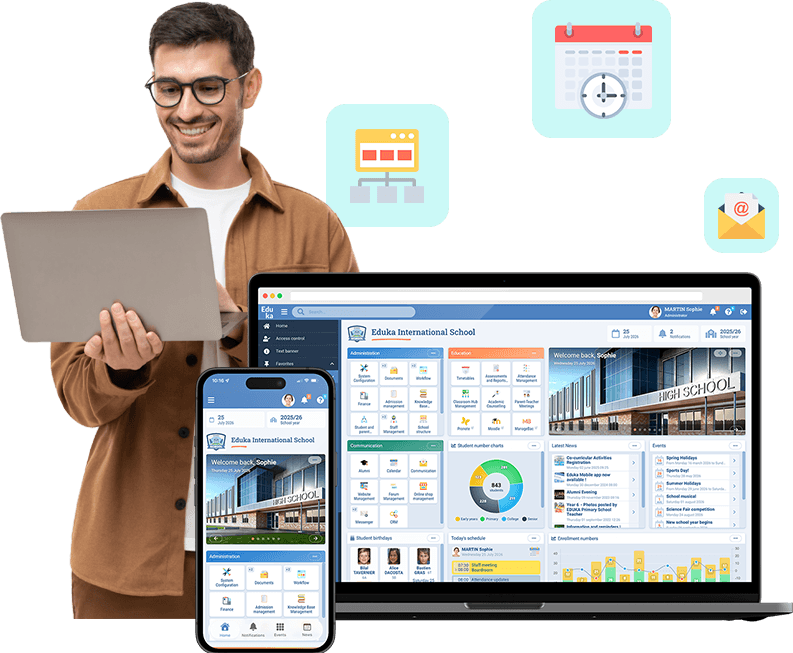





























Why has absence management become a strategic issue for schools?
The management of school absences is no longer limited to simply tracking attendance. Today, it serves as a key indicator of how well a school is functioning and how effectively students are being supported. School attendance is directly linked to academic success, student well-being, and the quality of communication between the school and families.
In many schools, managing absences involves several stakeholders: teachers, school support staff, administrators, and parents. When this process relies on manual procedures or disparate tools, it can quickly become time-consuming and prone to errors. Centralizing and streamlining the tracking of absences therefore improves the school’s responsiveness, facilitates coordination among teams, and ensures better support for students.
The Limitations of Absence Management Based Solely on Time Tracking
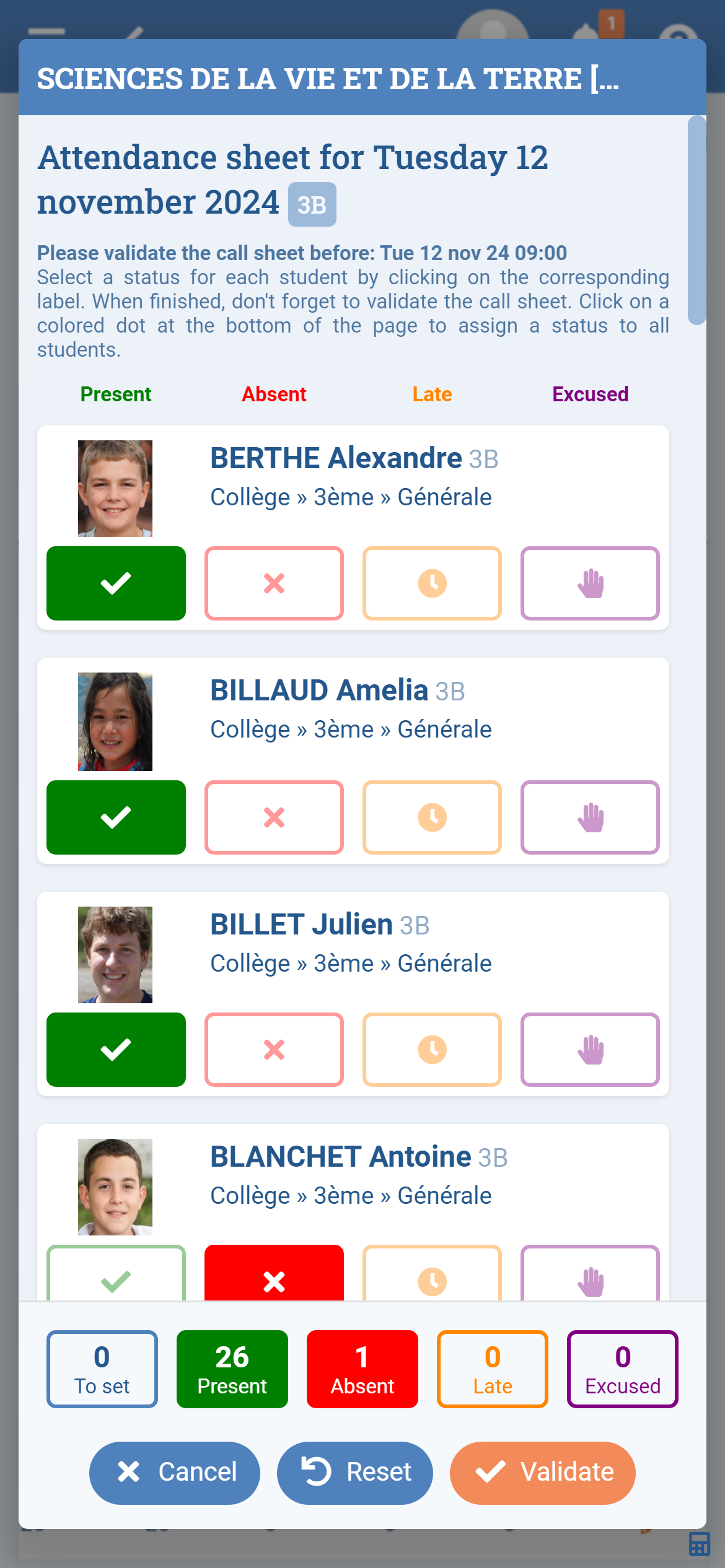
In many schools, absence management still relies on a simple attendance tracking system. Teachers report a student’s absence, and the information is then processed administratively. While this approach meets a basic need, it quickly reveals its limitations when the school seeks to improve its organization or gain a better understanding of attendance patterns.
Without the right tools, administrative teams often have to perform multiple checks, follow up with families, and consolidate information from various sources. Absence data can be scattered across different files or systems, making it difficult to get a comprehensive view of the situation. In this context, absence management becomes more of an administrative task than a true tool for educational monitoring.
Transforming absence management with digital tools
The digitization of school operations is now making it possible to radically transform the way absences are managed. School management software offers features that simplify data entry, automate certain tasks, and facilitate the flow of information among the various stakeholders within the school.
Teachers can report absences directly from their dashboard in just a few seconds. The administration then has a centralized view of absences and can quickly process excuse notes or contact families if necessary. Parents, for their part, can receive real-time updates via notifications or by accessing a dedicated portal.
This approach saves time on a daily basis while improving the reliability of information. Absence management then becomes a seamless process, fully integrated into the institution’s overall management tools.
Using attendance data to better support students
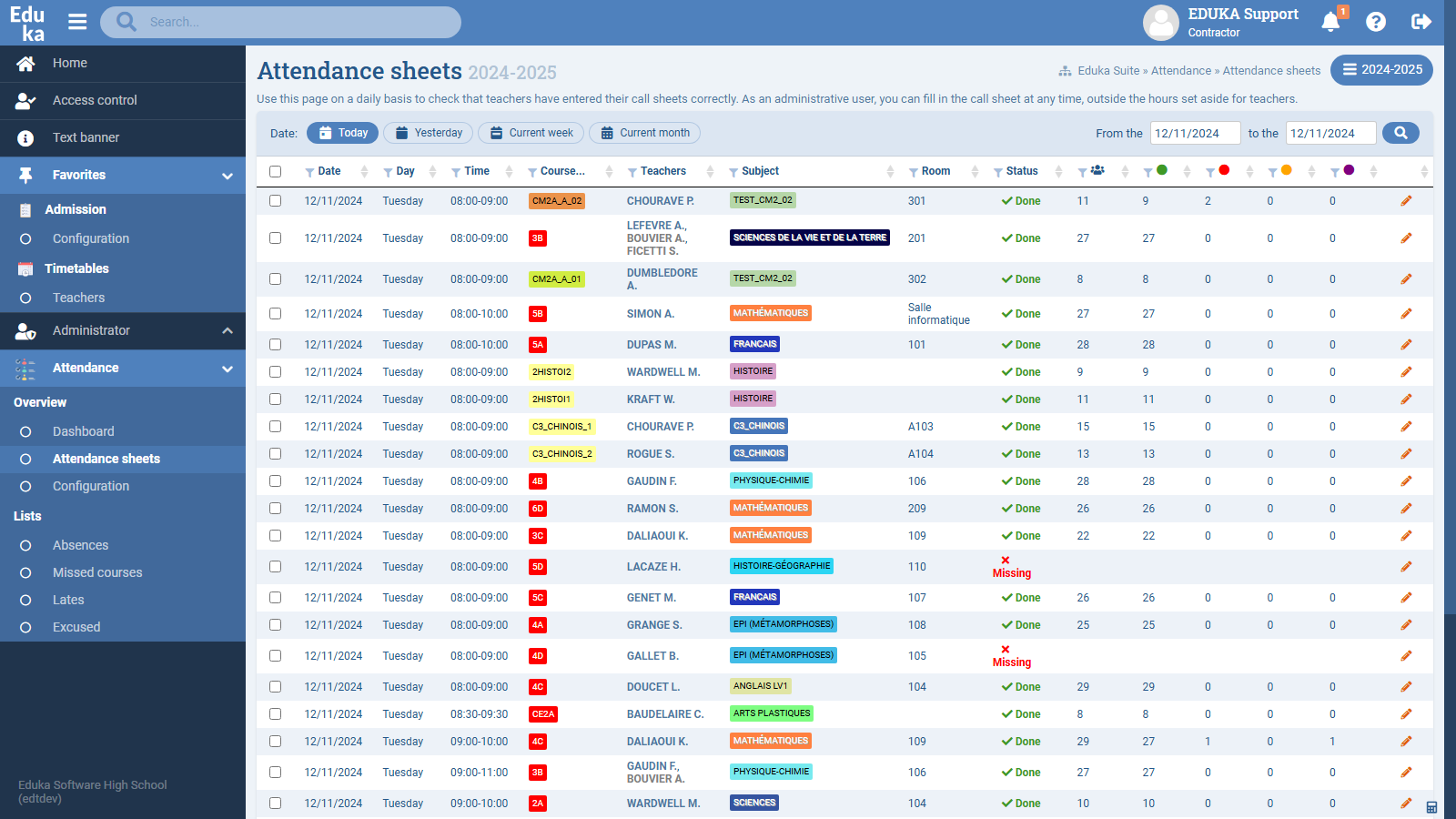
When properly centralized, absence data serves as a valuable source of information for schools. It makes it easier to identify certain trends, such as repeated absences during specific periods or in certain subjects.
Analyzing this data can help teaching staff identify situations requiring special attention more quickly. For example, a student whose attendance is gradually declining can receive support earlier on to prevent the situation from worsening.
Absence management is therefore no longer merely an administrative requirement; it has become a valuable decision-making tool for the school. By having a clear picture of student attendance, educational staff can tailor their approaches and strengthen academic support.
An integrated approach: absences, communication, and school organization
To be truly effective, attendance management must be part of a broader ecosystem. It is closely linked to other aspects of school life, such as scheduling, communication with families, and classroom management.
When these various components are integrated into a single school management platform, information flows more smoothly. For example, an absence can be automatically linked to a specific class in the schedule, notified to parents, and visible to teaching staff.
This integrated approach helps prevent duplicate data entry and improves data consistency. It also helps provide a clearer experience for all users: teachers, administrators, parents, and students.
How school management platforms are modernizing absence tracking
Modern school management platforms now make it possible to streamline and automate the entire process of tracking absences. Teachers can report absences directly from their course interface, while administrators can monitor all cases from a centralized dashboard.
Families can be quickly notified of absences via alerts or through access to a dedicated portal. Proof of absence can be submitted and processed easily, which reduces processing times and improves transparency in tracking.
In an integrated platform like Eduka, absence management is part of a broader suite of tools: timetables, messaging, classroom management, and communication with parents. This approach allows schools to streamline their operations while improving the quality of student monitoring.
The Eduka Absence Management module:
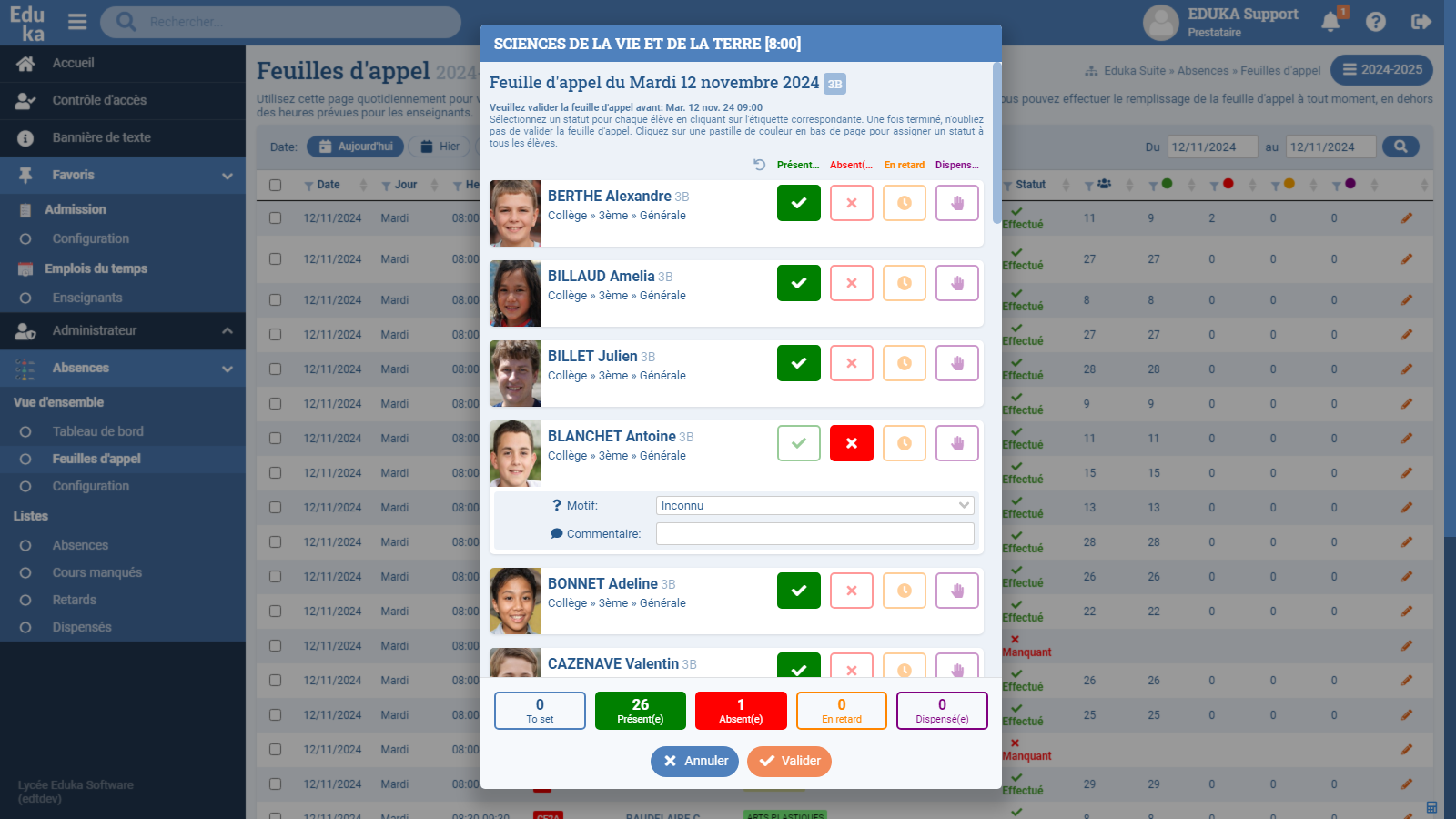
As part of its educational suite, Eduka offers an absence management module that allows you to:
- Customizing student statuses and reasons for absence using color codes.
- Simplified entry of absences, tardies, and excused absences by teachers via the Classroom Hub portal.
- Tracking absences, tardiness, and excused absences by day, week, month, quarter, or year.