






























How to Manage Multi-Currency Billing at an International School
At many international schools, managing tuition payments in multiple currencies has become a daily reality. With expatriate families, local regulations, and a variety of payment methods, billing can quickly become complex.
Some schools start out using simple solutions like Excel or general-purpose accounting tools. But as soon as the number of students increases or situations become more complex, these tools reach their limits.
So how can an international school effectively manage multi-currency billing while avoiding errors and time-consuming manual tasks?
Why multi-currency billing quickly becomes complex
In an international context, schools often have to manage multiple currencies at the same time. Some families prefer to pay in their local currency, while the school may need to bill in a reference currency.
This situation creates several layers of complexity.
- Exchange rates fluctuate regularly, which can affect the amount of invoices. Schools must decide whether to use a fixed rate, the current rate, or an average rate.
- Local regulations may also require specific billing formats or particular payment methods.
- Finally, the variety of payment methods adds an extra layer of complexity to the management process. Bank transfers, online payments, and local solutions such as Boleto or QR bill require tailored processing.
Common mistakes in multi-currency management
Many schools face similar challenges when managing payments in multiple currencies.
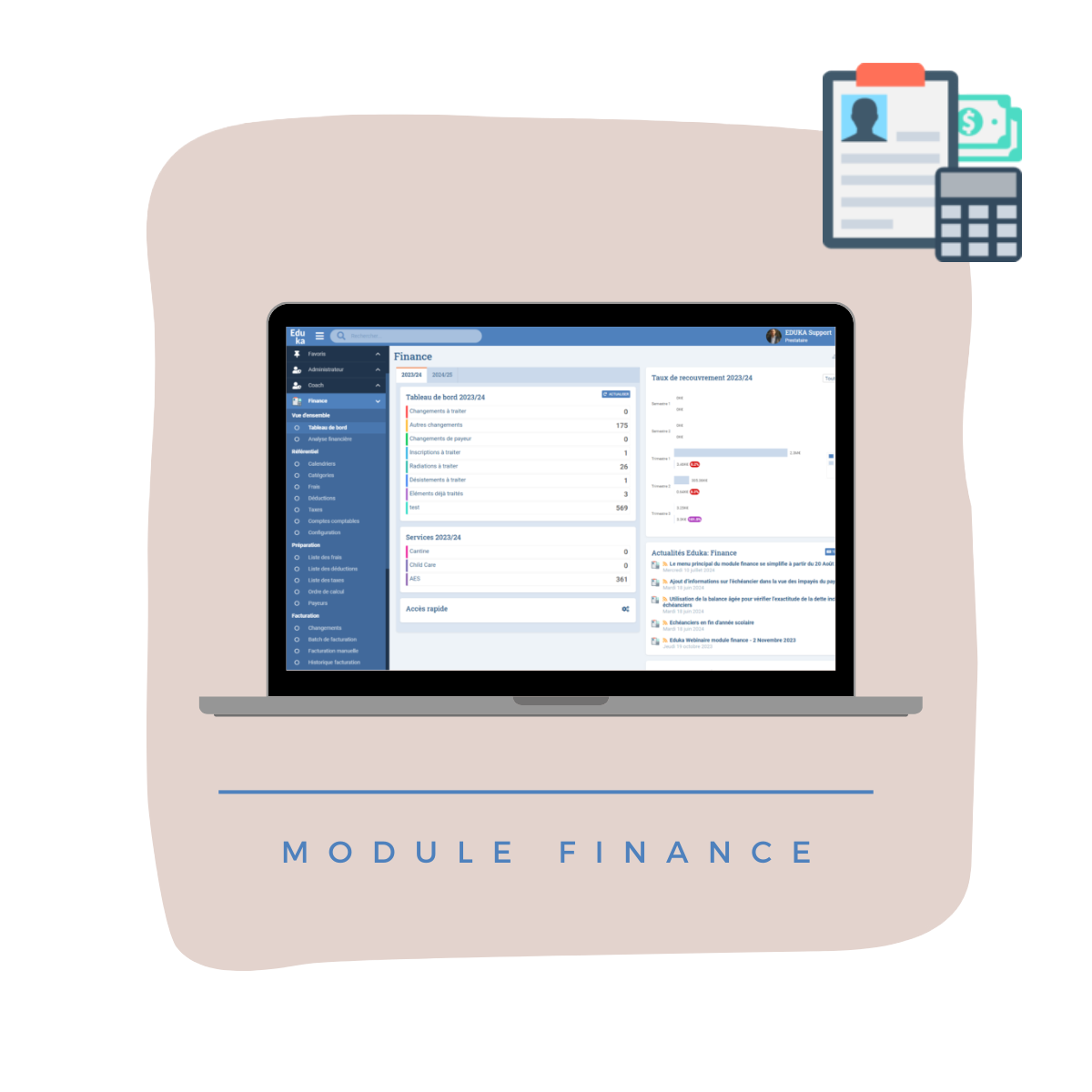
- The first mistake is using unsuitable tools, such as spreadsheets. Teams then have to manually manage exchange rates, recalculate amounts, and verify payments.
- Another common mistake is the lack of standardization. Each family may be treated differently, which complicates follow-up and communication.
- Some schools also have trouble reconciling invoices and payments. When a payment is made in a different currency, it becomes difficult to determine whether the amount matches the invoice exactly.
- Finally, the lack of overall visibility can prevent finance teams from accurately tracking receipts and balances, leading to unpaid invoices.
The limitations of traditional tools for managing multiple currencies
General-purpose tools are not typically designed to handle the specific needs of international schools.
| Excel | Accounting software |
| + Allows for calculations – Does not structure processes. – Data is often scattered and requires manual updates. | + Can handle multiple currencies, – Not always suited to school-specific needs. – Does not account for specific requirements such as tuition fees, school services, or student-related payment schedules. |
In this context, teams often have to juggle multiple tools, which complicates management and increases the administrative burden.
What a school management software system needs to handle in a multi-currency environment
To simplify the management of tuition fees in multiple currencies, software must meet several key requirements:
- It must allow us to bill families in different currencies while maintaining accounting consistency.
- Exchange rate management must be integrated and customizable. The institution must be able to define clear rules and avoid manual recalculations.
- The system must also facilitate the reconciliation of invoices and payments, even when the currencies differ.
- Support for various payment methods is essential. International schools must be able to adapt to the local payment methods used by families.
- Finally, the software must provide a clear overview of cash receipts, balances, and transactions to facilitate financial management.
How a platform like Eduka simplifies multi-currency billing
School management platforms designed for international schools enable the structuring and automation of multi-currency management.
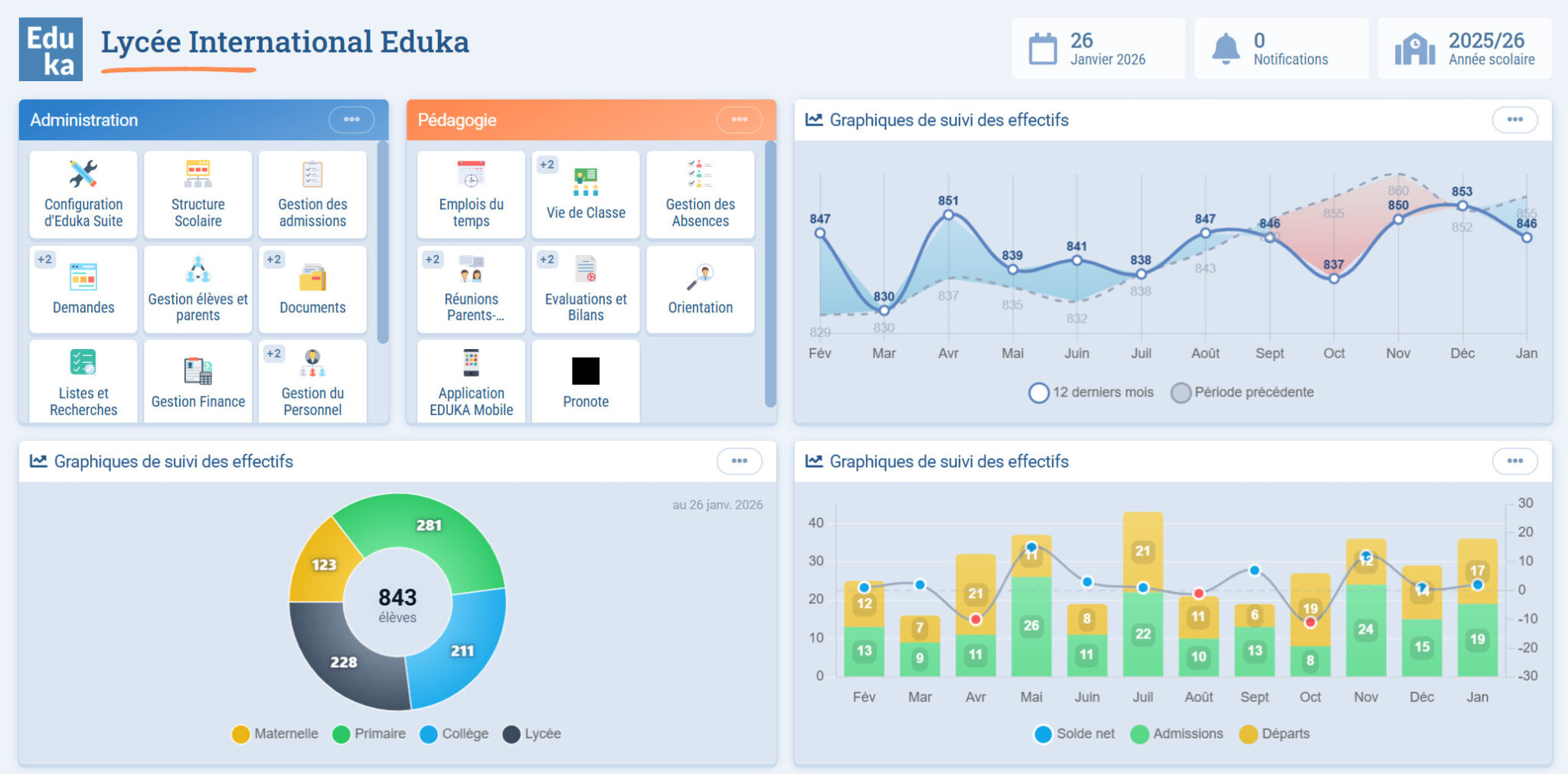
- In a solution like Eduka, financial data is directly linked to students and families. This allows for centralized information management and eliminates the need for duplicate data entry.
- Institutions can manage billing in multiple currencies while maintaining overall consistency in their financial management.
- Payments can be integrated and tracked directly within the platform, making it easier to reconcile and track incoming payments.
- The platform also takes local specifics into account, such as payment methods specific to certain countries, which simplifies interactions with families. pays, ce qui simplifie la relation avec les familles.
This approach helps reduce manual tasks, improve data reliability, and simplify the work of administrative teams.
Why Switch from Excel for Multi-Currency Management
Excel can be useful for one-off tasks, but it quickly reaches its limits in a multi-currency environment. Manually managing exchange rates, invoices, and payments becomes difficult to maintain on a large scale.
The risk of errors increases, and data transparency decreases. Switching to a school management platform helps streamline processes, automate calculations, and secure data.
Simplify your management today with Eduka
What do you think?
This article is open for discussion in the Eduka Community. Ask your questions and share your experience with other schools.